Garth Marenghi’s Darkplace: Skipper the Eyechild (S1E03)
Plot Summary
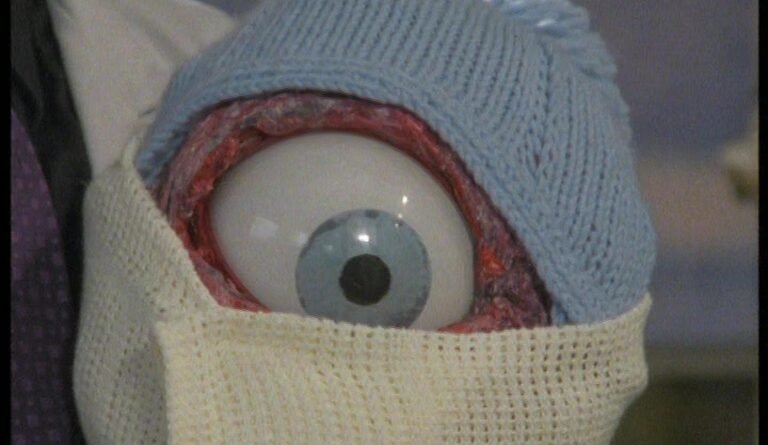
Episode three of Garth Marenghi’s Darkplace introduces one of the series’ most infamous creations, Skipper the Eyechild, a half-boy, half-eyeball entity whose very existence raises far more questions than the episode is willing, or able, to answer. The story opens with a supernatural pregnancy that progresses at alarming speed, immediately setting the tone for another bout of medical horror nonsense.
A woman gives birth to Skipper, a child born with a giant eye embedded in his head, the result of occult interference that is never fully explained. Darkplace Hospital staff react with a mixture of fear, mild curiosity, and questionable bedside manner. Rick Dagless attempts to bond with the child, delivering paternal speeches that suggest emotional depth but land somewhere between confusing and unsettling.
Skipper is revealed to possess psychic abilities, including telepathy and destructive eye-based powers. His emotional instability becomes the episode’s central threat, as tantrums lead to death, explosions, and vaguely defined psychic events. The hospital’s approach to childcare consists mostly of shouting, moral lectures, and letting Skipper wander unsupervised.
As tensions escalate, Dagless faces the ultimate moral dilemma, whether to save the hospital or show mercy to a dangerous supernatural child. The final act resolves this conflict with startling brutality, presented as noble sacrifice despite its obvious ethical problems. Any potential fallout is immediately ignored, and Darkplace carries on as though nothing out of the ordinary has occurred.
Highlights
- Skipper himself, a genuinely memorable monster both ridiculous and disturbing.
- The parody of supernatural child horror, clearly riffing on films like The Omen.
- Rick Dagless’ attempt at fatherly warmth, which feels deeply inappropriate.
- Special effects that aim for tragedy but land squarely in cheap absurdity.
What Doesn’t Work:
- The ethics of the resolution are never questioned within the story.
- Skipper’s powers fluctuate wildly depending on the needs of the plot.
- Secondary characters largely exist to react rather than contribute.
- The emotional tone shifts abruptly between sincerity and farce.
Final Thoughts
“Skipper the Eyechild” is Darkplace at its most gleefully tasteless. The episode pushes horror parody into deeply uncomfortable territory, deliberately mimicking television that mistook shock value for depth. Its central concept is unforgettable, even if the storytelling around it is a mess. As a piece of satire, it works precisely because it refuses to acknowledge how strange, cruel, or nonsensical it all is.