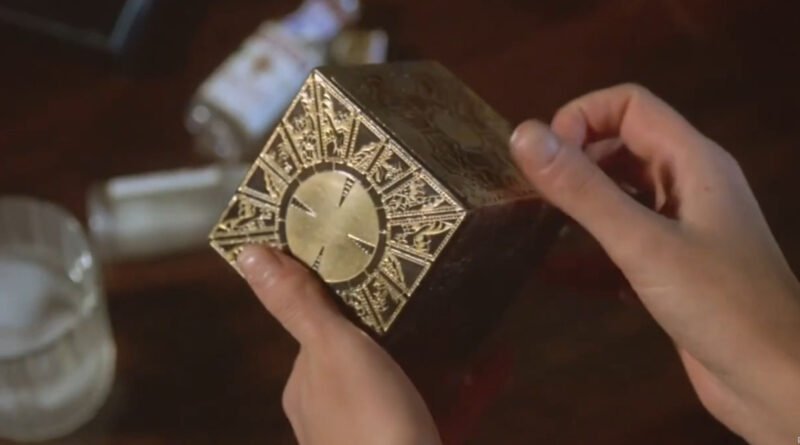
Hellraiser: Deader (2005) Review – Cult Horror Meets the Lament Configuration in a Dark Franchise Turn
Title:
Hellraiser: Deader (2005)
Writer(s):
Clive Barker (characters), Neal Marshall Stevens, Tim Day
Director:
Rick Bota
Main Cast: Actor (Character):
Kari Wuhrer (Amy Klein), Paul Rhys (Winter), Doug Bradley (Pinhead), Simon Kunz (Charles Richmond)
Synopsis
Hellraiser: Deader (2005) follows investigative journalist Amy Klein, sent to Romania to uncover the truth behind a mysterious underground cult known as the Deaders—people who appear to have mastered the ability to die and return to life. As Amy delves deeper into their world, she discovers a link between the cult’s enigmatic leader, Winter, and the infamous Lament Configuration. Drawn into a supernatural conspiracy that blurs death, resurrection, and psychological torment, Amy faces the Cenobites and ultimately Pinhead himself as she uncovers the horrific price of cheating death.
The story mixes noir-style investigation with supernatural horror, leaning heavily into themes of trauma, addiction, and the seductive pull of oblivion.
What Works
Kari Wuhrer gives one of the stronger performances of the franchise’s direct-to-video era. Her portrayal of Amy, broken but stubbornly resilient, grounds the film emotionally.
The Romanian locations lend the film a gloomy, atmospheric edge. The grimy flats, abandoned tunnels, and crumbling architecture all enhance the feeling of descending into a hidden, decaying world.
The Deaders cult is a genuinely interesting concept, expanding the Hellraiser universe beyond the puzzle box and into the realm of forbidden rites and death manipulation. Winter makes for an unsettling antagonist, his cold charisma adding tension.
Pinhead’s final appearance is brief but satisfying, delivering sharp commentary on humanity’s obsession with power and immortality.
What Doesn’t Work
Like several sequels from this era, Deader is clearly adapted from an unrelated script, resulting in a story that feels only loosely connected to the Hellraiser mythology. This leads to tonal inconsistencies and limited involvement from the Cenobites.
The narrative can feel disjointed, with dreamlike sequences that blur reality and hallucination to the point of repetition. Some viewers may find the structure confusing or unfocused.
The cult’s resurrection abilities, while intriguing, are underexplained and clash somewhat with established Hellraiser lore.
Budget constraints also show in certain effects and set pieces, with some moments lacking impact.
Final Thoughts: Does It Hold Up?
Hellraiser: Deader is an atmospheric and ambitious entry that tries to explore new corners of the franchise, delivering a moody and character-driven horror story. While it doesn’t fully integrate its cult mythology with Barker’s original vision, its strong lead performance and bleak tone make it more compelling than many would expect from the series’ seventh instalment.
It remains a flawed but intriguing sequel, haunted, grim, and unpredictable.
Who Would Enjoy This Episode?
- Fans of investigative or mystery-led horror.
- Viewers who prefer atmospheric, location-driven horror settings.
- Those interested in cult-based supernatural stories.
- Fans who enjoy psychological unravelling narratives.
Who Might Not Enjoy It?
- Viewers expecting significant Cenobite or Pinhead screen time.
- Fans who prefer clear continuity within the franchise.
- Those who dislike dreamlike, ambiguous, or fractured storytelling.
Final Verdict
Hellraiser: Deader (2005) is a dark, moody, and unconventional sequel that mixes cult horror with the traditional Hellraiser mythos. Despite structural flaws and limited Cenobite involvement, it stands out for its atmosphere and strong central performance.