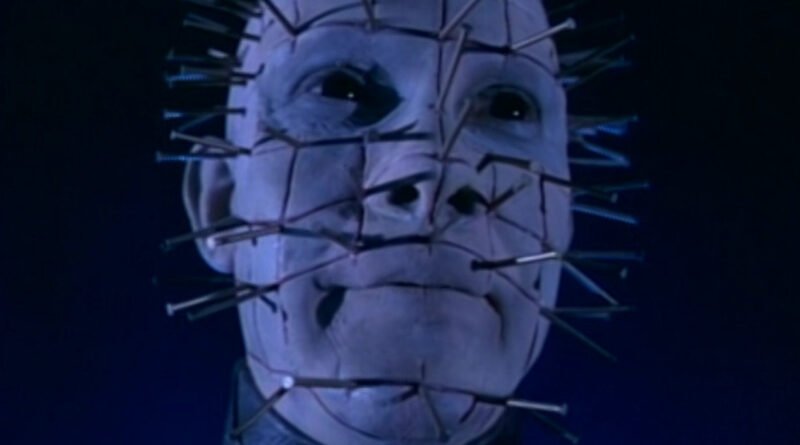
Hellraiser III (1992) Review: Pinhead Unleashed in a Chaotic, Action-Packed Urban Nightmare
Title:
Hellraiser III: Hell on Earth (1992)
Writer(s):
Clive Barker (characters), Peter Atkins (story & screenplay), Tony Randel (story)
Director:
Anthony Hickox
Main Cast: Actor (Character):
Terry Farrell (Joey Summerskill), Doug Bradley (Pinhead / Captain Elliot Spencer), Paula Marshall (Terri), Kevin Bernhardt (J.P. Monroe)
Synopsis
Hellraiser III: Hell on Earth (1992) shifts the franchise from intimate domestic horror to a more action-driven, urban nightmare. Joey Summerskill, a young TV reporter, witnesses a gruesome supernatural incident in a hospital and begins investigating its connection to a mysterious puzzle box. Her search leads her to J.P. Monroe, a sleazy nightclub owner who has acquired a grotesque sculpture containing the imprisoned Pinhead. When Pinhead is accidentally released, he brings hell directly to Earth, unleashing chaos across the city. Joey must confront both Pinhead and his human counterpart, Captain Elliot Spencer, in a battle that blurs the line between humanity and monstrousness.
What Works
Doug Bradley delivers his most expansive and confident performance as Pinhead. This film allows him to fully embrace the character’s theatrical menace, giving the franchise an iconic horror villain operating on a grander scale.
The shift in setting to urban America refreshes the series and injects new energy into the narrative. The nightclub massacre sequence is a standout moment of 90s horror excess, gleefully chaotic, violent, and unforgettable.
The film also attempts to deepen the mythology by separating Pinhead from his human soul, Captain Elliot Spencer. This duality adds an unexpected layer to the story and provides a compelling emotional counterpart to the carnage.
Practical effects remain strong, with imaginative new Cenobites whose outlandish designs reflect early-90s industrial style. The heavy metal-infused soundtrack amplifies the film’s darker, more rebellious tone.
What Doesn’t Work
Hellraiser III leans far more into camp and spectacle than psychological dread, which may disappoint fans of the first two films’ more intimate and literary approach.
Some of the new Cenobites feel gimmicky rather than truly terrifying, reflecting the era’s fascination with style over substance. The tonal shift towards action horror can also feel jarring, especially for those expecting Barker’s trademark gothic surrealism.
Character development beyond Joey and Pinhead is thin, and certain plot elements, particularly J.P. Monroe’s arc, lack weight or satisfying resolution.
Final Thoughts: Does It Hold Up?
Hellraiser III holds up surprisingly well as a loud, stylish, and entertaining early-90s horror sequel. Though it diverges significantly from Barker’s haunting, introspective tone, it succeeds on its own terms as a bloody, imaginative, and chaotic supernatural romp. It may not be the most profound entry in the series, but it is certainly one of the most memorable.
Who Would Enjoy This Episode?
- Fans of horror sequels that go bigger and bolder.
- Viewers who enjoy action-horror hybrids.
- Those who want more Pinhead and expanded Cenobite lore.
- Fans of 90s industrial-aesthetic horror.
Who Might Not Enjoy It?
- Viewers loyal to the more gothic, psychological tone of the first film.
- Those who prefer subtlety over spectacle.
- Audiences who dislike campy or exaggerated horror imagery.
Final Verdict
Hellraiser III: Hell on Earth (1992) is a bold, chaotic sequel that takes the franchise in a louder and more explosive direction. While not as thematically rich as its predecessors, it offers unforgettable visuals, expanded lore, and Doug Bradley’s most commanding Pinhead performance.