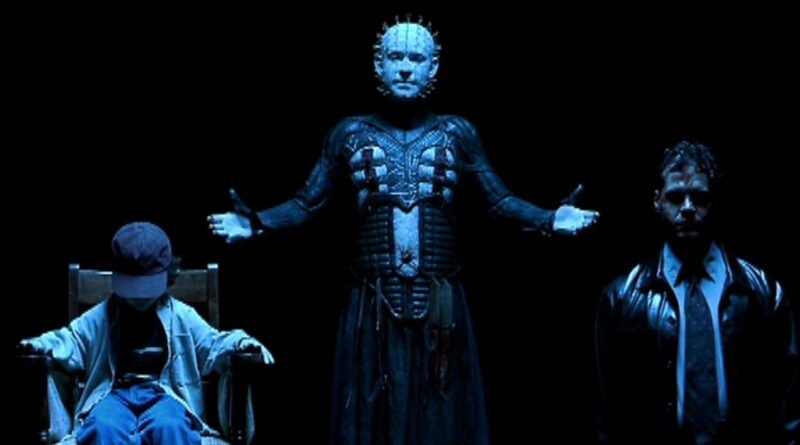
Hellraiser: Inferno (2000) Review: A Dark, Psychological Twist on the Hellraiser Franchise
Title:
Hellraiser: Inferno (2000)
Writer(s):
Clive Barker (characters), Paul Harris Boardman, Scott Derrickson
Director:
Scott Derrickson
Main Cast: Actor (Character):
Craig Sheffer (Detective Joseph Thorne), Nicholas Turturro (Detective Tony Nenonen), Doug Bradley (Pinhead), James Remar (Dr. Paul Gregory), Noelle Evans (Melanie Thorne)
Synopsis
Hellraiser: Inferno (2000) follows Detective Joseph Thorne, a corrupt and morally compromised police officer whose latest case leads him into a spiralling nightmare. After discovering the Lament Configuration at a crime scene, Thorne begins to experience disturbing visions, gruesome murders, and psychological breakdowns. As reality blurs with hallucination, Thorne becomes trapped in a labyrinth of guilt and self-destruction. Pinhead lurks at the edges of his torment, waiting for Thorne to confront the truth about his own sins. Rather than a direct continuation of the earlier films, Inferno shifts the franchise into psychological horror and moral allegory.
What Works
The film’s strength lies in its psychological approach. Instead of relying solely on gore or spectacle, Inferno focuses on guilt, addiction, and self-punishment. This gives it a noirish atmosphere reminiscent of Jacob’s Ladder or Se7en, setting it apart from typical franchise sequels.
Craig Sheffer delivers a committed performance as Joseph Thorne. He effectively portrays a man collapsing under the weight of his vices, and his gradual descent is compelling even when the plot becomes abstract.
Scott Derrickson’s direction brings a sense of dread and surrealism. The imagery—twisted corridors, uncanny doubles, faceless Cenobites—creates a nightmarish ambience that suits the story’s internal focus.
Doug Bradley’s appearance as Pinhead, though limited, is impactful. His calm, judicial presence anchors the film and provides a satisfying thematic payoff.
What Doesn’t Work
Fans hoping for a more traditional Hellraiser experience may be disappointed. Pinhead and the Cenobites appear sparingly, and the film’s structure feels closer to a standalone psychological thriller retrofitted into the franchise.
Some sequences feel repetitive or overly reliant on dream logic, which can make the narrative frustrating or confusing. The ending, while thematically consistent, might feel predictable to viewers familiar with morality-tale horror.
Budget limitations occasionally show through in the special effects and Cenobite designs, which lack the polish of earlier entries.
Final Thoughts: Does It Hold Up?
Hellraiser: Inferno holds up as a bold, divisive, and atmospheric entry that dares to shift the franchise into new territory. Its psychological horror elements give it a unique identity within the series, even if the result feels disconnected from Barker’s original tone. For viewers open to a more introspective, character-driven story, it remains one of the stronger direct-to-video sequels.
Who Would Enjoy This Episode?
- Fans of psychological and surreal horror.
- Viewers who enjoy morally driven character studies.
- Those who prefer subtle dread over graphic gore.
- Fans of Scott Derrickson’s later work (Sinister, The Black Phone).
Who Might Not Enjoy It?
- Viewers expecting heavy Cenobite action or classic franchise continuity.
- Those who dislike dreamlike or ambiguous narratives.
- Fans looking for the practical-effects spectacle of earlier entries.
Final Verdict
Hellraiser: Inferno (2000) is a moody, introspective twist on the franchise, prioritising psychological torment over visceral horror. Though divisive, its ambition and atmosphere make it a memorable and often underrated instalment.