Garth Marenghi’s Darkplace: A Retrospective
When Garth Marenghi’s Darkplace first aired in 2004, it arrived looking like a relic from another era. Shot on video, badly lit, awkwardly edited, and stuffed with performances that veer wildly between wooden and overwrought, it initially baffled casual viewers. Over time, however, it has become one of the most celebrated cult comedies in British television history, particularly within horror fandom. What makes Darkplace endure is not just that it is funny, but that it understands horror deeply enough to parody it with precision and affection.
At its core, Darkplace presents itself as a forgotten 1980s hospital-based horror drama written, directed by, and starring fictional horror author Garth Marenghi. The framing device is key. Rather than mocking horror from the outside, the show pretends to be horror created by someone with enormous confidence and very little talent. That distinction gives the series its strange warmth and its sharpest satire.
Once Upon a Beginning (S1E01)
The opening episode establishes everything the series needs to work. Darkplace Hospital is introduced as a medical facility plagued by supernatural forces, cursed land, and scriptwriting that actively resists logic. Rick Dagless arrives as the brooding hero, a man of mystery whose backstory is hinted at but never coherently explained. Floating eyeballs, demonic possessions, and baffling medical responses immediately set the tone.
What makes this episode particularly effective is how confidently it deploys mistakes. Characters know things they should not, emotional beats are misplaced, and the supernatural threat is resolved with startling ease. Trivia-wise, many of the deliberately bad edits and continuity errors were painstakingly planned, often requiring multiple takes to ensure they felt wrong in the right way. It is an episode that teaches the audience how to watch Darkplace, rewarding attention to its failures.
Hell Hath Fury (S1E02)
The second episode leans into gender politics as filtered through outdated horror television. A demon born from female rage stalks the hospital, turning suppressed emotion into literal monstrosity. This is parody with teeth. The episode mirrors how older genre television often framed women’s emotions as dangerous or destabilising, while simultaneously reproducing those tropes without commentary.
The discomfort is intentional. Liz Asher’s emotional detachment is treated as suspicious, while male characters offer nonsense psychology in place of empathy. One piece of behind-the-scenes trivia is that the writers deliberately avoided modernising the attitudes on display, aiming instead to replicate the casual sexism of the era being spoofed. The result is an episode that feels awkward for all the right reasons.
Skipper the Eyechild (S1E03)
Arguably the series’ most infamous episode, “Skipper the Eyechild” introduces a supernatural child whose design alone secures the show’s cult status. A baby born with a giant eye embedded in his head, Skipper is both tragic and absurd, a walking parody of films like The Omen and Village of the Damned.
The episode’s lasting impact comes from its refusal to soften its central premise. Rick Dagless’ paternal instincts are wildly inappropriate, and the ultimate resolution presents a morally indefensible act as noble sacrifice. Trivia often cited by fans is that the Skipper prosthetic was deliberately designed to look cheap, despite the team being capable of better effects. The discomfort this creates is a perfect encapsulation of Darkplace at its boldest.
The Apes of Wrath (S1E04)
With “The Apes of Wrath”, Darkplace swerves into creature feature territory. Genetically enhanced apes rampage through the hospital, fuelled by vague science and moral outrage. This episode is notable for how casually it introduces and discards its ethical concerns. Animal experimentation is raised, briefly acknowledged, and then abandoned in favour of shouting and action poses.
The apes themselves fluctuate wildly in intelligence, sometimes philosophical, sometimes feral. This inconsistency is not a flaw but a deliberate parody of low-budget genre television trying to appear ambitious. The episode also highlights the show’s commitment to genre hopping, proving that Darkplace is not limited to supernatural horror alone.
Scotch Mist (S1E05)
“Scotch Mist” shifts the focus inward, parodying psychological horror and prestige television that equates madness with intensity. A fog that drives people insane drifts through Darkplace Hospital, causing paranoia, mood swings, and sudden philosophical monologues. The mist behaves inconsistently, appearing and disappearing based entirely on narrative convenience.
One of the episode’s strengths is its performances. Actors are encouraged to overplay insanity, mimicking a style of television acting that mistakes volume for depth. Trivia from interviews suggests this episode was particularly challenging to film, as maintaining the balance between sincerity and absurdity required careful calibration. It is less visually iconic than other episodes, but thematically sharp.
The Way Out (S1E06)
The finale attempts to raise the stakes to apocalyptic levels. Darkplace Hospital is revealed as a nexus of supernatural forces, Rick Dagless as a chosen figure destined to save reality itself. Cult members, prophecies, and mystical jargon flood the episode, arriving far too late to feel earned.
This is Darkplace parodying horror finales that confuse scale with significance. Character arcs are sacrificed for destiny, and exposition replaces development. Yet as an ending, it feels perfectly appropriate. The lack of closure reinforces the idea that Darkplace exists in a perpetual state of unresolved nonsense, ready to lurch into another crisis at any moment.
Characters and Performances
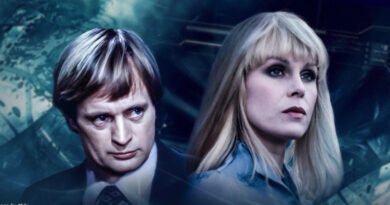
Much of the show’s success rests on its performances. Matthew Holness’ Garth Marenghi is a masterpiece of misplaced confidence, while his portrayal of Rick Dagless embodies the worst instincts of genre heroes. Richard Ayoade’s Dean Learner, the fictional publisher and producer, serves as both enabler and apologist, delivering commentary that deepens the satire.
Matt Berry’s Dr Lucien Sanchez deserves special mention. His intense delivery, mangled accent, and commitment to every ridiculous line elevate even the weakest scenes. Alice Lowe’s Liz Asher provides a counterpoint, her restrained performance highlighting the absurdity around her.
Trivia and Production Details
Despite its low-budget appearance, Darkplace was meticulously constructed. Scenes were often reshot to introduce errors, and lighting was intentionally mishandled to replicate the look of cheap videotape productions. The show originated from the Garth Marenghi’s Netherhead stage show, with several ideas refined for television.
Interestingly, the series initially struggled to find its audience. Early broadcasts drew modest attention, with its cult reputation growing through DVD releases and word of mouth. This delayed appreciation mirrors many of the obscure horror works it parodies.
Impact on British Horror Satire
Garth Marenghi’s Darkplace occupies a unique place in British comedy. Unlike broader spoofs, it is deeply specific, targeting a particular era of horror television with forensic accuracy. Its influence can be seen in later genre-aware comedies that embrace failure as an aesthetic choice.
The show also helped legitimise horror parody as something that could be both affectionate and critical. Rather than dismissing horror as silly, Darkplace treats it seriously enough to expose its weaknesses. This balance has earned it enduring respect within horror circles.
Why Darkplace Endures
Two decades on, Darkplace remains endlessly rewatchable. Each viewing reveals new mistakes, new layers of parody, and new appreciation for its craftsmanship. It rewards genre knowledge but remains accessible to newcomers willing to meet it on its own terms.
Ultimately, Garth Marenghi’s Darkplace is a love letter to horror made by someone who understands its failures as well as its strengths. It is a show about ambition outrunning ability, about confidence masquerading as talent, and about the strange beauty that emerges when things go spectacularly wrong. Few series have embraced their own badness so completely, or so cleverly, and that is why Darkplace continues to haunt British television in the best possible way.