
Sapphire & Steel: Assignment One (Season 1)
Sapphire & Steel: Assignment One (Season 1)
Plot Summary
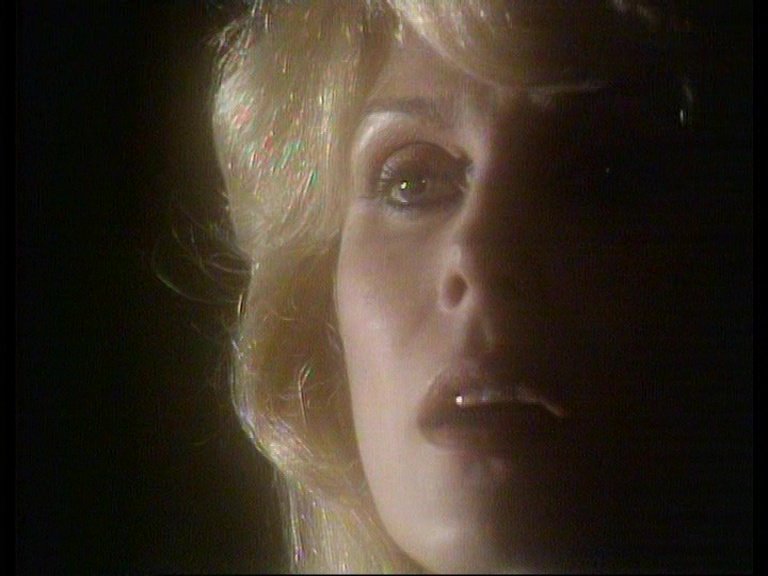
The opening assignment of Sapphire & Steel wastes no time establishing a universe that feels both rigidly ordered and quietly terrifying. A seemingly ordinary suburban home becomes the site of a temporal disturbance, one that manifests not through spectacle but through language, repetition, and memory. The first signs are subtle. Children begin reciting nursery rhymes with unusual intensity, repeating phrases that seem to carry weight far beyond their innocent origins.
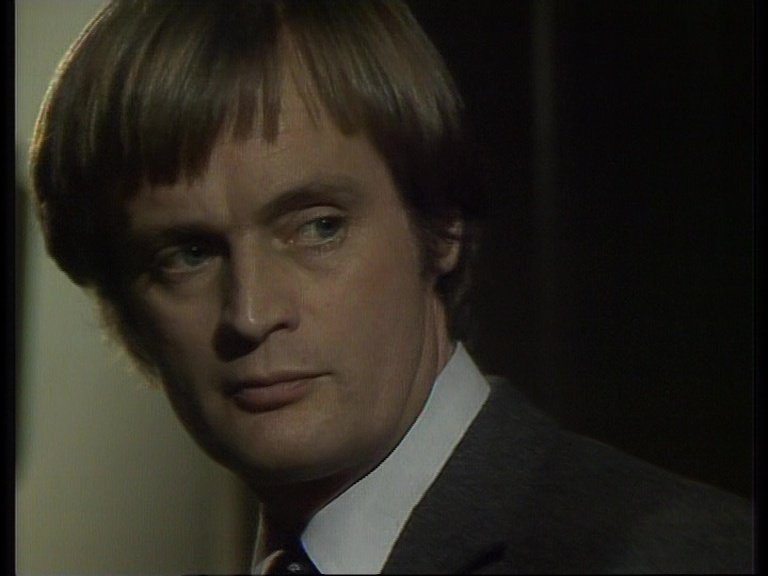
Into this fragile domestic space arrive Sapphire and Steel. They do not introduce themselves in any conventional sense, nor do they attempt to reassure the family. Instead, they assume control. Their authority is immediate and unquestioned, though never explained. They speak in measured, deliberate tones, treating time as something physical, something that can fracture, leak, and be repaired. The implication is unsettling. The threat is not an intruder in the traditional sense, but a breach in reality itself.
As the investigation unfolds, the house becomes increasingly claustrophobic. Familiar spaces begin to feel hostile. The repetition of nursery rhymes grows more insistent, creating a rhythm that borders on hypnotic. Children, who should represent innocence, instead become conduits for something ancient and unknowable. The disturbance feeds on pattern and memory, exploiting the deeply embedded nature of these rhymes within British culture.
Sapphire approaches the situation with a form of alien empathy. She seeks to understand the nature of the breach, to interpret its behaviour and contain it through knowledge. Steel, by contrast, is direct and uncompromising. Where Sapphire observes, Steel acts. His methods are often harsh, bordering on cruel, yet they are presented as necessary within the logic of the series.
The resolution arrives not through confrontation in the traditional dramatic sense, but through containment. The breach is sealed, the flow of time stabilised, and the immediate danger is removed. Yet the solution feels procedural rather than triumphant. There is no sense of victory, only the restoration of a fragile order. The lack of explanation lingers, reinforcing the idea that this incident is merely one of many, part of a much larger and more complex conflict.
Deeper Analysis
What sets Assignment One apart from typical genre television of its era is its refusal to externalise horror. There are no monsters in the conventional sense, no clear antagonist that can be identified, confronted, and defeated. Instead, the threat emerges from within the fabric of reality itself. Time is not a backdrop but a battleground, and human experience becomes the medium through which it is attacked.
The use of nursery rhymes is particularly effective because of their cultural specificity. These are fragments of language learned in early childhood, repeated across generations, and rarely questioned. By turning them into vectors of intrusion, the episode undermines something deeply familiar. The horror lies not in the rhymes themselves, but in their persistence. They exist outside individual memory, carried collectively through time, which makes them an ideal point of entry for whatever force is attempting to break through.
This idea taps into a broader theme running throughout the series. Time is porous. It is not a fixed sequence of events but a structure that can be weakened through repetition, memory, and emotional resonance. In this context, nursery rhymes function almost like temporal anchors, loops of language that connect past and present. The disturbance exploits these loops, using them to gain access to the present.
Sapphire and Steel themselves are equally significant in shaping the tone of the episode. They are not heroes in any traditional sense. They do not comfort, they do not explain, and they do not appear particularly concerned with human wellbeing beyond what is required to complete their task. Their detachment is central to the show’s unsettling atmosphere. They operate according to rules that are never fully articulated, suggesting a hierarchy or system that exists far beyond human understanding.
Steel, in particular, embodies this rigidity. His actions are decisive and often severe, reinforcing the idea that the preservation of time takes precedence over individual lives. Sapphire provides a counterbalance, not through warmth, but through curiosity. She engages with the situation in a way that suggests a desire to understand rather than simply control. Together, they represent two approaches to the same problem, logic and intuition, enforcement and interpretation.
The domestic setting is another crucial element. By confining the story to a single house, the episode creates a sense of intimacy that amplifies the horror. There is no escape, no wider world to retreat into. The threat is contained within the familiar, making it all the more disturbing. This approach also reflects the production constraints of the series, which relied on limited sets and minimal effects. Rather than detracting from the story, these limitations enhance its impact.
The pacing of the episode is deliberately measured. Scenes linger longer than expected, allowing tension to build gradually. Silence is used as effectively as dialogue, creating space for unease to develop. This slow rhythm may feel unusual to modern audiences, but it is essential to the episode’s atmosphere. The horror is not immediate or explosive. It seeps in, gradually altering perception until the ordinary becomes threatening.
Another notable aspect is the absence of conventional exposition. The audience is not given a clear explanation of who Sapphire and Steel are, where they come from, or how their abilities function. This lack of information is not a flaw but a deliberate choice. By withholding answers, the episode invites the viewer to engage more actively, to interpret rather than simply receive information.
Highlights
- The transformation of nursery rhymes into a source of horror, exploiting their cultural familiarity.
- The introduction of Sapphire and Steel as enigmatic agents operating beyond human understanding.
- A tightly controlled atmosphere built through minimalism, pacing, and sound design.
- The concept of time as a fragile, permeable structure rather than a fixed continuum.
- Strong performances that convey tension and authority without relying on overt emotion.
What Doesn’t Work:
- The lack of explicit explanation may alienate viewers expecting clearer narrative rules.
- Supporting characters are underdeveloped, functioning primarily as part of the scenario rather than as individuals.
- The deliberate pacing can feel slow, particularly for those accustomed to faster storytelling.
- Emotional engagement is limited, as the focus remains on concept and atmosphere rather than character depth.
Final Thoughts
Assignment One is a remarkably confident introduction to Sapphire & Steel. It establishes the series’ identity with precision, prioritising atmosphere, ambiguity, and conceptual horror over spectacle and resolution. While it may initially appear sparse or even obscure, its strength lies in that very restraint.
The episode invites the viewer to sit with uncertainty, to accept that not everything will be explained, and to find meaning in implication rather than exposition. This approach sets it apart from much of its contemporaries and contributes significantly to its enduring appeal.
In many ways, Assignment One functions as a statement of intent. It tells the audience exactly what kind of series this will be, one that values mood over momentum, ideas over answers, and unease over entertainment in the conventional sense. For those willing to engage with it on these terms, it offers a deeply unsettling and rewarding experience.



Pingback: Sapphire & Steel (1979): A Retrospective