Horror Hotel (1960) Review – A Chilling Gothic Witchcraft Horror Classic
Title:
Horror Hotel (1960) (also known as City of the Dead)
Writer(s):
George Baxt, Milton Subotsky
Director:
John Llewellyn Moxey
Main Cast: Actor (Character):
Christopher Lee (Professor Alan Driscoll), Venetia Stevenson (Nan Barlow), Betta St. John (Patricia Russell), Valentine Dyall (Jethrow Keane), Patricia Jessel (Mrs. Newless)
Synopsis
Horror Hotel (1960), also released as City of the Dead, is a chilling British-American gothic horror that blends witchcraft, paranoia, and atmospheric dread. The film follows Nan Barlow, an American student encouraged by her professor to travel to the remote English village of Whitewood to research witchcraft.
Upon arrival, Nan finds herself in a town shrouded in perpetual fog, populated by strange, secretive locals. Staying at the eerie Raven’s Inn, she soon realises that something is deeply wrong. As she digs deeper into the village’s dark history—rooted in 17th-century witch burnings, Nan becomes entangled in a sinister cult that may be continuing those rituals in the present day.
When Nan mysteriously disappears, her brother and boyfriend travel to Whitewood to uncover the truth, leading to a terrifying confrontation with the town’s hidden evil.
What Works
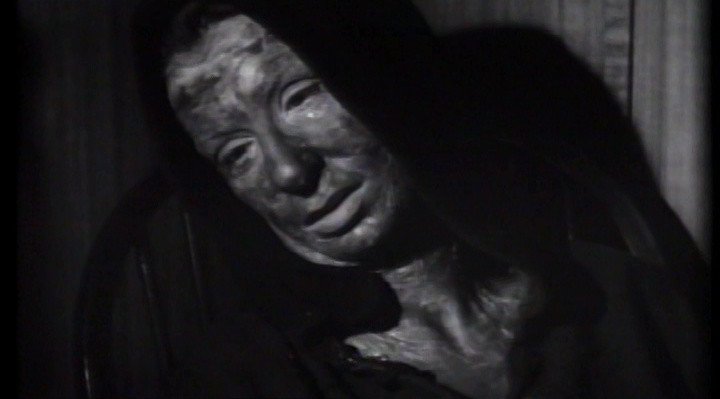
The film’s atmosphere is its greatest strength. The fog-drenched village of Whitewood feels isolated and otherworldly, creating a constant sense of unease. The black-and-white cinematography enhances this effect, using shadows and stark contrasts to evoke a dreamlike, almost surreal quality.
Christopher Lee delivers a quietly menacing performance, bringing gravitas to the role of Professor Driscoll. Though his screen time is limited, his presence lingers throughout the film.
The film’s exploration of witchcraft is handled with seriousness rather than camp, giving it a more unsettling tone compared to many contemporaries.
Its pacing is deliberate but effective, gradually building tension before delivering a series of memorable and disturbing moments.
What Doesn’t Work
Some modern viewers may find the pacing slow, particularly in the early scenes before the central mystery takes hold.
Character development is relatively minimal, with several supporting roles lacking depth beyond their function in the plot.
Certain plot elements may feel predictable to audiences familiar with later folk and occult horror films that expanded on similar themes.
Final Thoughts: Does It Hold Up?
Horror Hotel holds up remarkably well as a precursor to later folk horror and occult cinema. Its oppressive atmosphere and eerie setting remain effective, and its influence can be seen in films that explore isolated communities and hidden cults.
While it may not deliver intense shocks by modern standards, its creeping dread and strong visual style ensure it remains a compelling watch.
Who Would Enjoy This Episode?
- Fans of classic black-and-white horror.
- Viewers interested in witchcraft and occult themes.
- Admirers of atmospheric, slow-burn storytelling.
- Fans of Christopher Lee’s work.
Who Might Not Enjoy It?
- Viewers expecting fast-paced or graphic horror.
- Those who prefer modern production values.
- Audiences seeking complex character-driven narratives.
Final Verdict
Horror Hotel (1960) is a haunting and atmospheric gothic horror that excels in mood and setting. With its eerie depiction of witchcraft and memorable visuals, it stands as a cult classic and an important precursor to the folk horror genre.