Why 2026 Is the Year of Liminal Horror
The Rise of “Liminal” Horror
From the Backrooms to Your Bedroom: Why 2026 is the Year of Liminal Spaces
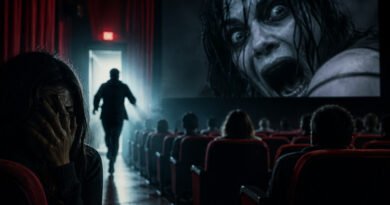
There was a time when horror relied on monsters lurking in the shadows. Today, the shadows themselves are the horror. Welcome to the unsettling world of liminal horror—a genre defined not by what is there, but by what isn’t.
In 2026, this once niche aesthetic has surged into the mainstream. With the growing popularity of projects inspired by the Backrooms and a wave of internet-born horror, audiences are increasingly drawn to empty corridors, silent playgrounds, and fluorescent-lit offices that feel just… wrong. But why does “nothingness” scare us so deeply?
What Is Liminal Horror?
The term “liminal” comes from the Latin limen, meaning threshold. A liminal space is somewhere that exists between two states—neither here nor there. Think of an empty school corridor during the summer holidays, a motorway service station at 3am, or a shopping centre just after closing time.
Liminal horror takes these spaces and strips them of life. No people. No noise. Just an eerie stillness that suggests something is off. It’s not the presence of danger that frightens us—it’s the absence of normality.
The Backrooms Effect
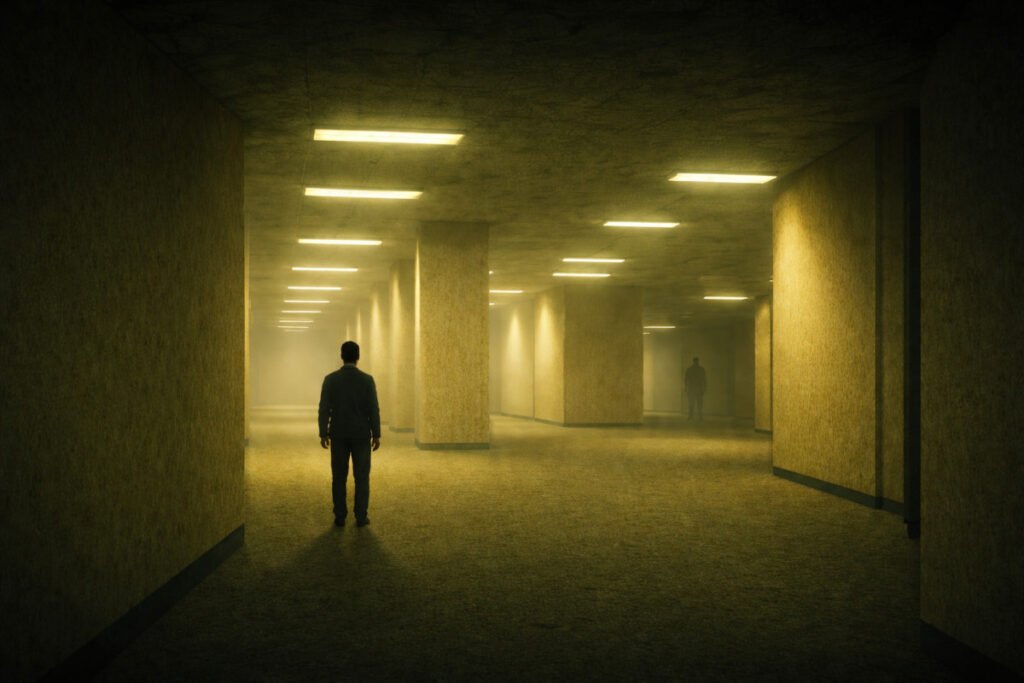
Few concepts have captured the imagination quite like the Backrooms: endless yellow corridors, buzzing lights, and a sense of being trapped in an infinite, monotonous maze. Originally born from an internet post, the Backrooms quickly evolved into a collaborative horror mythos.
What makes it so effective is its familiarity. The setting feels like somewhere you’ve been before—an office, a hotel, a forgotten building—but stretched into something unnatural. It’s recognisable, yet deeply alien.
Why Liminal Spaces Terrify Us
At its core, liminal horror taps into psychological discomfort rather than outright fear. There are several reasons why these empty spaces get under our skin:
1. The Uncanny Familiar
We recognise these environments, but something is off. The brain struggles to reconcile the normal with the abnormal, creating unease.
2. Absence of Human Presence
Humans are social creatures. When a space that should be populated is empty, it feels wrong—almost as if something has gone terribly wrong.
3. Infinite Space and Isolation
Liminal spaces often feel endless. There’s no clear exit, no direction, and no sense of control. It taps into a primal fear of being lost.
4. Sensory Deprivation
The lack of sound or movement heightens awareness. Every small noise becomes amplified, and the silence itself becomes oppressive.
From Internet Oddity to Mainstream Horror
Liminal horror didn’t begin in cinemas—it grew online. Forums, image boards, and social media platforms were flooded with uncanny images of empty spaces, often captioned with vague, unsettling descriptions.
As the aesthetic gained traction, filmmakers and studios began to take notice. The result? A shift in horror storytelling. Instead of relying on jump scares, creators began to embrace atmosphere, ambiguity, and slow-burning dread.
Why 2026 Is the Year of Liminal Horror
Several factors have converged to bring liminal horror into the spotlight:
- Digital Culture: Online communities have refined and spread the aesthetic at lightning speed.
- Post-Pandemic Sensibilities: Empty public spaces became a real-world experience, making liminal imagery feel eerily familiar.
- Audience Fatigue: Viewers are craving something different from traditional horror tropes.
The result is a genre that feels fresh, modern, and deeply personal.
When Your Own Home Feels Wrong
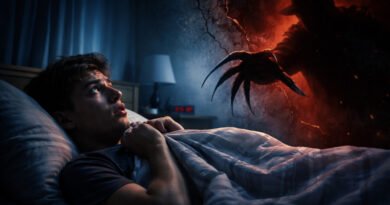
Perhaps the most disturbing aspect of liminal horror is how easily it can be applied to everyday life. A dimly lit hallway in your own home. A room that feels slightly too quiet. A space that should be comforting, suddenly feeling alien.
Liminal horror reminds us that fear doesn’t always come from the outside. Sometimes, it’s already there—hidden in the spaces we think we know best.
Final Thoughts
Liminal horror proves that you don’t need monsters to create fear. Sometimes, all it takes is an empty room, a flickering light, and the unsettling feeling that you’re not supposed to be there.
As 2026 unfolds, one thing is clear: the scariest place might not be a haunted house or a dark forest. It might be the familiar spaces you pass through every day.
And next time you find yourself alone in a quiet corridor, you might just wonder… why does it feel like someone should be there?