Wes Craven’s New Nightmare (1994) Review
Title:
Wes Craven’s New Nightmare (1994)
Writer(s):
Wes Craven
Director:
Wes Craven
Main Cast: Actor (Character):
Heather Langenkamp (Heather Langenkamp), Robert Englund (Freddy Krueger), Miko Hughes (Dylan Porter), John Saxon (John Saxon), David Newsom (Chase Porter), Tracy Middendorf (Julie), Wes Craven (Wes Craven)
Synopsis
Wes Craven’s New Nightmare (1994) is a radical and self reflexive reinvention of the A Nightmare on Elm Street franchise. Rather than continuing the established fictional continuity of Freddy Krueger as a slasher villain within a shared dream universe, the film introduces a metafictional concept in which Freddy is treated as an ancient evil entity that has been contained by storytelling itself, only to begin breaking through into the real world.
The story centres on Heather Langenkamp, the actress who famously portrayed Nancy Thompson in the original A Nightmare on Elm Street (1984). In this film, Heather is playing a fictionalised version of herself, living a relatively normal life with her husband Chase and her young son Dylan. However, strange disturbances begin to occur around her home, including unsettling phone calls, mechanical malfunctions, and increasingly violent nightmares experienced by Dylan.
As Heather struggles to understand what is happening, she begins to notice that reality itself is becoming unstable. She is contacted by Wes Craven, who reveals that he has been having dreams about Freddy Krueger returning, not as a film character, but as a real force attempting to cross over into the world of fiction and reality. Craven suggests that the only thing keeping Freddy contained is the existence of the films that once defined him.
When Heather’s husband dies in a sudden and horrific accident, the boundary between fiction and reality collapses further. Dylan becomes increasingly affected by Freddy’s influence, experiencing visions and sleep disturbances that suggest Freddy is trying to use him as a gateway.
Heather is forced to confront the possibility that her past role as Nancy Thompson may have been more than acting. As Freddy’s presence grows stronger, she must decide whether she can once again become the character who defeated him, or whether this time Freddy has evolved beyond the constraints of fiction.
What Works
One of the most impressive aspects of Wes Craven’s New Nightmare is its bold concept. By breaking the fourth wall and reimagining Freddy Krueger as a metaphysical force rather than a simple fictional killer, the film reinvents the franchise in a way that feels fresh and intellectually ambitious. It explores the idea that stories can contain evil, and that when those stories lose their structure, the contained horror may escape into reality.
Heather Langenkamp delivers a strong and grounded performance as a fictionalised version of herself. Her portrayal captures the emotional conflict of a mother trying to protect her child while also confronting her past association with a horror icon. The blending of her real world identity and her fictional legacy as Nancy Thompson creates a compelling psychological tension.
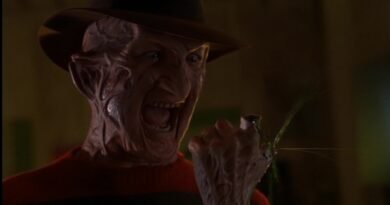
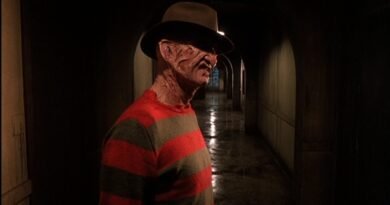
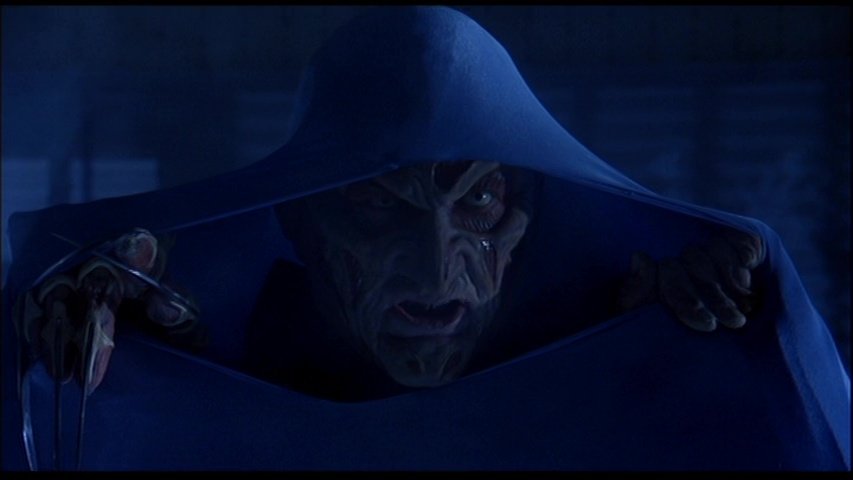
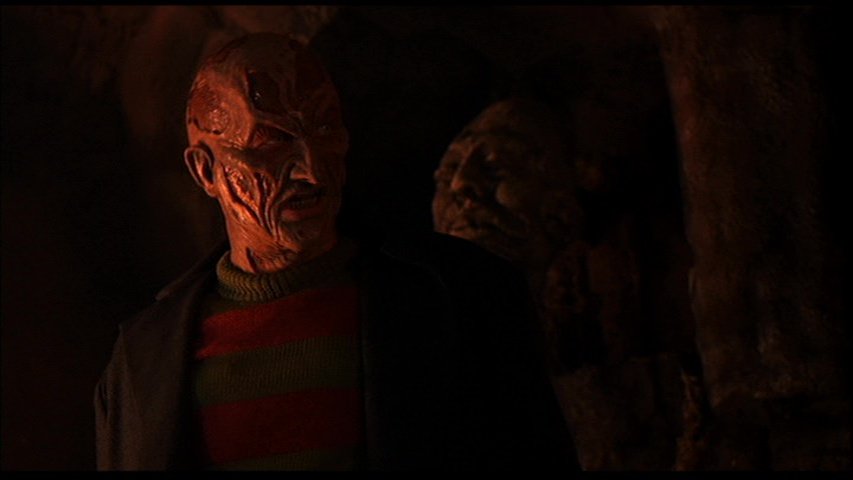
Robert Englund once again plays Freddy Krueger, but in a slightly altered form. In this version, Freddy appears more angular, darker, and closer to a primal force of chaos. The design is less cartoonish than some of the later sequels, returning to a more unsettling interpretation of the character.
Wes Craven’s direction is confident and atmospheric. The film uses shadow, silence, and distortion to create a sense of unease that is more psychological than physical. The horror is rooted in instability and uncertainty rather than constant jump scares.
Miko Hughes delivers a standout performance as Dylan Porter. His portrayal of a child caught between reality and nightmare is one of the emotional anchors of the film. His interactions with Freddy are particularly disturbing, as they blur the line between fear and manipulation.
The film’s meta narrative structure is one of its greatest strengths. By acknowledging its own fictional status, it creates layers of meaning that invite interpretation. It is both a horror film and a commentary on horror films, exploring how audiences, creators, and characters interact with mythologies like Freddy Krueger.
What Doesn’t Work
While the concept is widely praised, the execution can feel uneven in places. The shifting between reality and fiction sometimes creates confusion, particularly for viewers unfamiliar with the metafictional approach.
The pacing is slower compared to earlier Elm Street films. Much of the first half is focused on establishing atmosphere and character relationships rather than delivering traditional horror set pieces. While this builds depth, it may not satisfy viewers expecting constant action.
Some of the supporting characters are underdeveloped, serving primarily to advance Heather’s emotional arc or to facilitate Freddy’s intrusion into reality.
The film’s tonal balance can also feel inconsistent. At times it leans heavily into psychological drama, while at other moments it returns to surreal horror imagery. This dual identity is intentional but may not appeal to all audiences.
Certain visual effects, while creative, show their age. However, this is less distracting than in earlier entries due to the film’s more grounded aesthetic.
Final Thoughts: Does It Hold Up?
Wes Craven’s New Nightmare holds up exceptionally well as one of the most innovative entries in the A Nightmare on Elm Street franchise. It is less a conventional sequel and more a reinvention of what Freddy Krueger represents within horror cinema.
By stepping outside of traditional narrative boundaries, the film transforms Freddy from a fictional slasher into a symbolic embodiment of fear that exists wherever stories are told. This idea gives the film a unique place not only within the franchise but within horror history as a whole.
Heather Langenkamp’s performance remains central to its emotional impact. Her portrayal of a mother caught between reality and fiction adds human weight to an otherwise abstract concept.
Freddy Krueger’s presence in this film is more restrained but also more ominous. He feels less like a character within a story and more like an intrusion into the fabric of storytelling itself.
Over time, the film has gained recognition as one of Wes Craven’s most intelligent and self aware works. It anticipates later trends in meta horror, influencing films that would explore similar ideas in the years that followed.
Who Would Enjoy This Episode?
- Fans of the A Nightmare on Elm Street franchise seeking a more mature interpretation.
- Viewers who enjoy meta horror and self referential storytelling.
- Audiences interested in psychological and existential horror themes.
- Fans of Wes Craven’s directing style and thematic experimentation.
- Viewers who appreciate slower, atmospheric horror films.
Who Might Not Enjoy It?
- Viewers expecting traditional slasher structure.
- Those who prefer fast paced and action heavy horror.
- Audiences who dislike metafictional or self aware narratives.
- Fans of the more stylised and comedic Freddy Krueger appearances.
Final Verdict
Wes Craven’s New Nightmare (1994) is a bold and intelligent reinvention of the Freddy Krueger mythos. By blending psychological horror with metafictional storytelling, it offers one of the most original and conceptually rich entries in the franchise.