A Nightmare on Elm Street: A Retrospective
A Nightmare on Elm Street: A Retrospective
When Wes Craven’s A Nightmare on Elm Street arrived in 1984, it changed horror cinema forever. Slasher films already existed, but Craven introduced something new, a killer who did not simply stalk dark streets or isolated campsites, but invaded the one place nobody could avoid. Sleep itself became dangerous. That single concept transformed Freddy Krueger from another masked murderer into one of the most recognisable horror icons in film history.
Across seven original films and the crossover event Freddy vs. Jason, the series evolved dramatically. What began as surreal, frightening horror slowly transformed into something stranger, increasingly self-aware, comedic, and at times openly satirical. Few horror franchises have shifted tone so drastically while remaining culturally relevant.
The Nightmare on Elm Street series also occupies a unique place in horror history because it influenced not only horror itself, but horror parody and satire. Freddy’s personality, one-liners, and theatrical kills became templates for countless imitations, while the later films openly blurred the line between horror and dark comedy.
A Nightmare on Elm Street (1984)
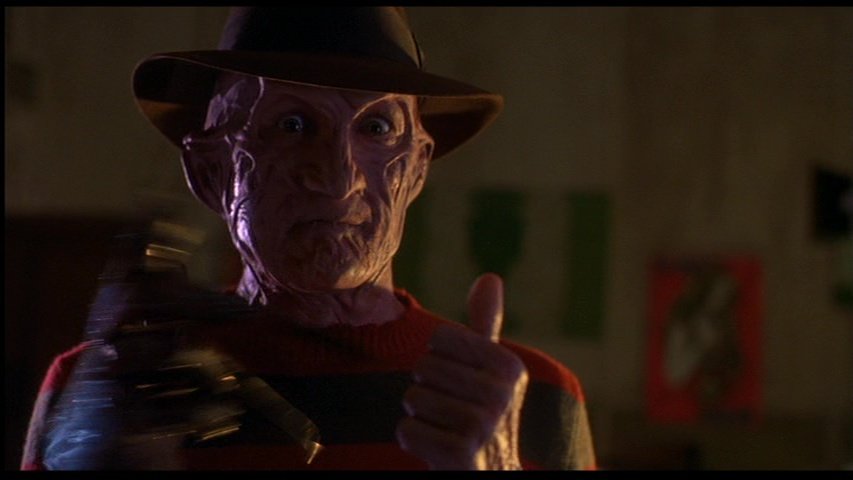
The original film remains one of the most inventive horror films ever made. Set in the suburban town of Springwood, the story follows teenager Nancy Thompson as she and her friends become haunted in their dreams by Freddy Krueger, a burned man wearing a red-and-green jumper and a glove fitted with razor-sharp blades.
What made the film revolutionary was its dream logic. Freddy was not bound by physical reality. He could manipulate environments, distort bodies, and weaponise fear itself. This allowed Craven to create surreal horror sequences unlike anything mainstream audiences had seen before.
The film also introduced one of horror’s strongest final girls in Nancy. Heather Langenkamp’s performance grounded the increasingly bizarre narrative, giving emotional weight to the film’s supernatural ideas.
Behind the scenes, the production was famously low budget. Many effects were achieved practically, including the rotating room used for Tina’s death sequence. The blood geyser scene, where Johnny Depp’s character is dragged into a bed, became one of horror cinema’s most iconic images.
Freddy himself was initially terrifying rather than comedic. Robert Englund played him as cruel, predatory, and unsettlingly playful. The wisecracking version of Freddy would come later.
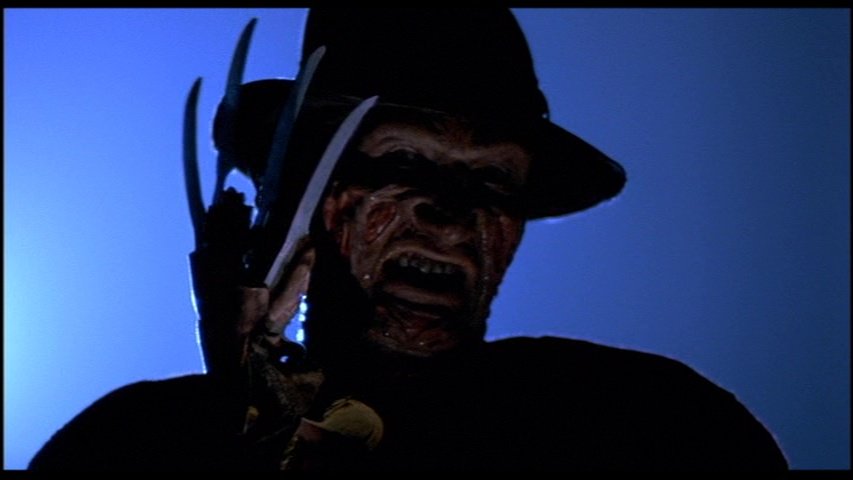
A Nightmare on Elm Street 2: Freddy’s Revenge (1985)
The sequel is one of the strangest and most divisive entries in the franchise. Rather than repeating the original formula, Freddy’s Revenge focuses on Jesse Walsh, a teenager who appears to be psychologically merging with Freddy.
At the time of release, critics and audiences were confused by the film’s tone and themes. Over the years, however, it has been critically re-evaluated, particularly for its strong queer subtext. Actor Mark Patton later discussed how the film reflected anxieties surrounding identity, repression, and masculinity.
Freddy’s Revenge also experiments with Freddy entering the real world more directly, weakening some of the dream-based rules established in the first film. This makes the movie feel inconsistent within the broader mythology, but also gives it a uniquely uncomfortable atmosphere.
Trivia surrounding the production has become almost as famous as the film itself. Patton has spoken openly about the hostile environment surrounding discussions of sexuality in Hollywood during the 1980s, and the film is now widely viewed as an important queer cult horror text.
While often criticised for its messy narrative and tonal confusion, the sequel deserves credit for refusing to become formulaic so early in the franchise.
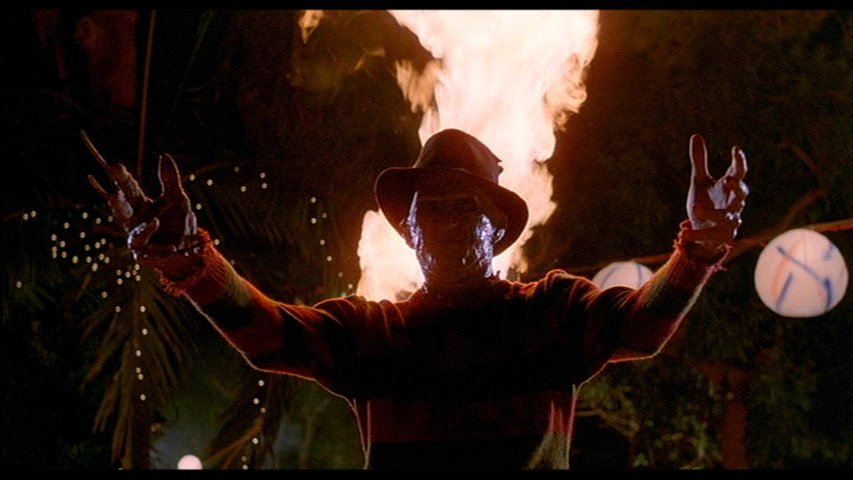
A Nightmare on Elm Street 3: Dream Warriors (1987)
Widely regarded as one of the best entries in the series, Dream Warriors successfully expanded the mythology while restoring the dream-centred horror of the original.
The story follows a group of troubled teenagers in a psychiatric hospital who discover they possess dream powers capable of fighting Freddy. Nancy Thompson returns, now older and more experienced, serving as a mentor figure.
This film marks the true birth of Freddy as a pop culture personality. While still frightening, he becomes more theatrical and sarcastic, delivering memorable one-liners before kills. The balance between horror and humour is far more refined here than in later sequels.
The practical effects remain extraordinary. The puppet sequence involving Phillip’s veins remains one of the franchise’s most disturbing scenes, while the stop-motion skeleton effects showcased ambitious creativity.
Behind the scenes, Wes Craven returned to help develop the story after disliking the direction of the second film. His influence helped steer the series back towards psychological fantasy horror.
The film also had a major cultural impact. The idea of dream powers and shared dreaming influenced later horror and fantasy stories, while Freddy’s increased charisma helped cement him as a merchandising phenomenon.
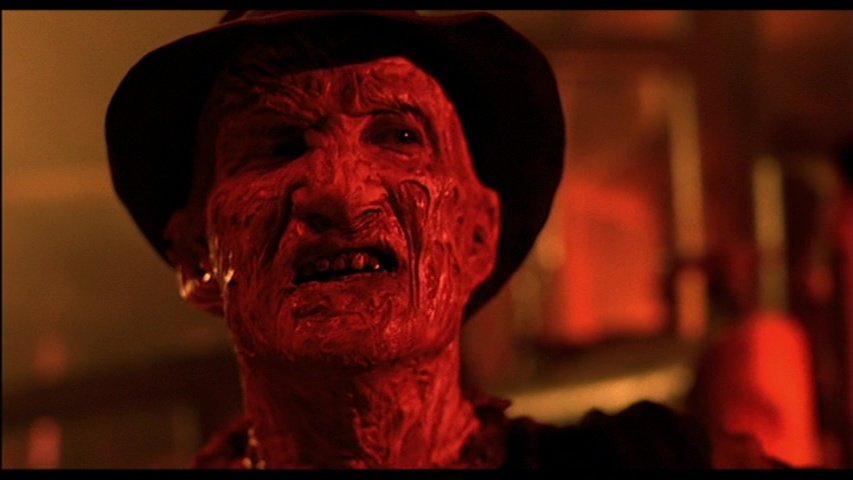
A Nightmare on Elm Street 4: The Dream Master (1988)
If Dream Warriors refined the formula, The Dream Master fully commercialised it. Directed by Renny Harlin, the film embraces spectacle, visual excess, and MTV-style editing.
The story follows Alice Johnson, a shy teenager who gradually becomes the Dream Master, absorbing the strengths of her fallen friends as Freddy continues his attacks.
Freddy becomes noticeably funnier here, leaning heavily into puns and dark humour. While this made him even more commercially successful, it also reduced some of the menace that defined the earlier films.
Visually, however, the film is stunning. Dream sequences become increasingly elaborate and stylised, pushing the franchise further into fantasy territory. The cockroach transformation sequence remains a fan favourite for its grotesque body horror.
The film was a massive financial success and became the highest-grossing entry in the series at the time. Its fast pacing and energetic style appealed strongly to younger audiences.
Critically, though, this is often seen as the point where the franchise began prioritising Freddy’s entertainment value over genuine fear.
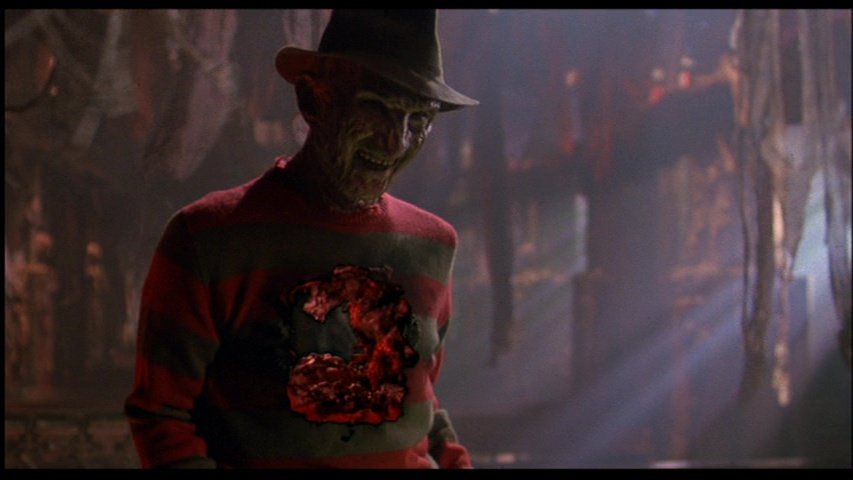
A Nightmare on Elm Street 5: The Dream Child (1989)
Released only a year later, The Dream Child attempted to continue Alice’s story while exploring themes of parenthood, trauma, and inherited evil.
The central concept, Freddy using an unborn child’s dreams to return, is genuinely disturbing and fits the franchise’s surreal mythology. Unfortunately, the film struggles with pacing and tonal inconsistency.
Visually, the gothic influences are much stronger. Cathedrals, comic-book imagery, and dark fantasy aesthetics dominate the dream sequences. Freddy’s backstory is also expanded, revealing more about his abusive childhood.
One of the film’s most memorable scenes involves Greta’s death at a grotesque dinner table, where Freddy force-feeds her. The sequence perfectly captures the franchise’s blend of surrealism and black comedy.
Production problems affected the final result. Budget constraints and rushed scheduling limited the effects work, while censorship issues forced cuts to some darker material.
Although often ranked among the weaker entries, The Dream Child remains fascinating for its willingness to push the series deeper into nightmare symbolism and dreamlike imagery.
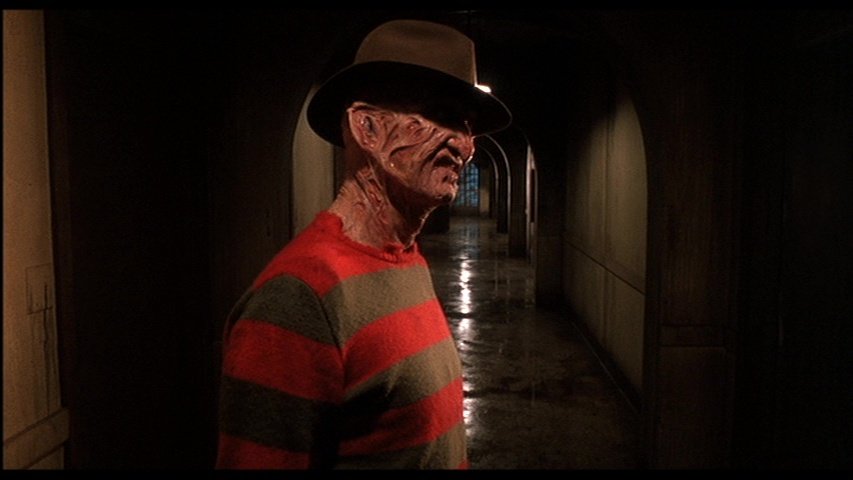
Freddy’s Dead: The Final Nightmare (1991)
By the early 1990s, Freddy Krueger had become less a horror villain and more a mainstream celebrity. Freddy’s Dead fully embraces this transformation.
The film depicts a future in which Freddy has apparently killed every child in Springwood. The remaining survivors attempt to uncover his origins while Freddy dispatches victims using increasingly cartoonish dream sequences.
This is the broadest and most openly comedic entry in the original series. Freddy wears disguises, references pop culture, and delivers jokes constantly. At times, the film feels closer to parody than horror.
Yet beneath the silliness lies some interesting mythology. Freddy’s abusive upbringing and eventual transformation into the Dream Demon’s servant are explored in greater detail.
Trivia surrounding the production highlights how aware the filmmakers were of Freddy’s celebrity status. The film was heavily marketed as a major finale event, complete with 3D sequences for the climax.
While many fans dislike the exaggerated comedy, the film unintentionally became influential in horror satire. Its self-aware tone foreshadowed the meta-horror boom that would arrive later in the decade.
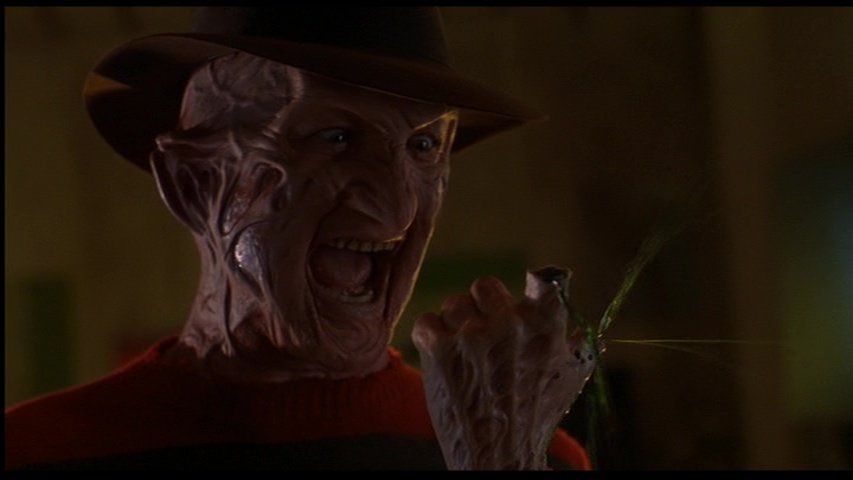
Wes Craven’s New Nightmare (1994)
Arguably the smartest film in the entire franchise, New Nightmare completely reinvents the concept.
Rather than continuing the established storyline, the film takes place in the real world, where actors and crew from the original Nightmare on Elm Street films begin experiencing supernatural events connected to Freddy.
Heather Langenkamp plays herself, as do Robert Englund and Wes Craven. Freddy is reimagined as an ancient entity using fiction as a gateway into reality.
This metafictional approach was years ahead of its time. The film explores horror’s relationship with storytelling, fear, and audience psychology in ways few mainstream horror films had attempted.
Freddy himself becomes frightening again. His redesign, featuring a darker costume and more organic glove, restores some of the menace lost in the sequels.
The movie was not a major box office hit initially, but its reputation has grown enormously over time. Many critics now view it as one of the greatest horror sequels ever made.
Importantly, New Nightmare directly influenced Wes Craven’s later film Scream. The self-aware horror boom of the late 1990s owes a huge debt to this movie.
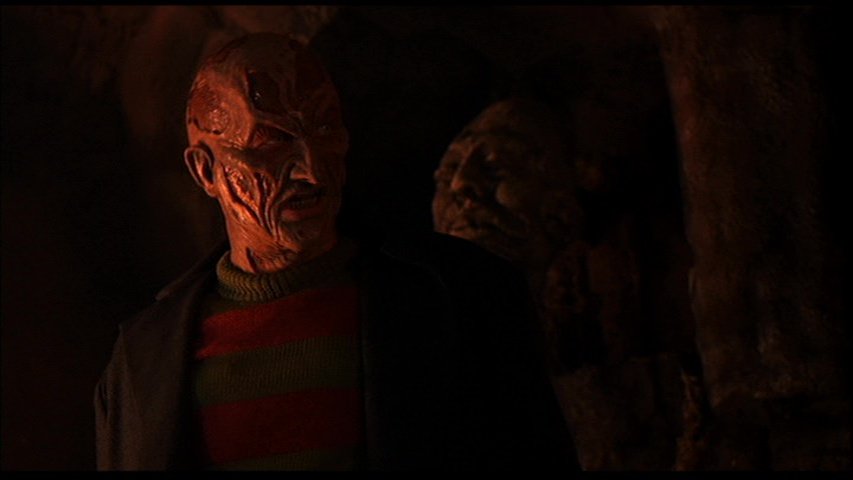
Freddy vs. Jason (2003)
After years of development hell, Freddy vs. Jason finally brought together horror’s two biggest slasher icons.
The plot cleverly explains Freddy’s weakened state. The people of Springwood have forgotten him, robbing him of power. To restore fear, he manipulates Jason Voorhees into killing teenagers, hoping the murders will remind people of Freddy once again.
The crossover balances two very different horror styles. Freddy represents psychological, surreal horror, while Jason embodies brute-force physical violence. Watching the two clash is undeniably entertaining.
Ronny Yu directs the film with operatic energy, leaning fully into spectacle. The final battle, set around Crystal Lake, delivers exactly the kind of absurd excess fans wanted.
Freddy is once again highly comedic, but Robert Englund’s performance remains charismatic enough to hold everything together. Jason, played by Ken Kirzinger, is portrayed as a hulking, unstoppable force.
While critics were mixed, audiences embraced the film as a celebration of slasher cinema. It functions almost like a greatest-hits collection of horror tropes, combining dream horror, camp comedy, gore, and action.
The film also highlights Freddy’s enormous cultural influence. By this point, he had evolved from terrifying child murderer into a horror antihero audiences actively cheered for.
Freddy Krueger and the Rise of Horror Satire
One of the most fascinating aspects of the Nightmare on Elm Street franchise is how naturally it evolved into horror satire.
The original film contains dark humour, but Freddy is still genuinely frightening. Over time, however, his personality expanded. He became theatrical, sarcastic, and self-aware. This transformation reflected broader changes within horror culture during the 1980s.
Audiences increasingly wanted memorable villains rather than faceless killers. Freddy’s dialogue, visual style, and theatrical kills made him uniquely marketable. Toys, television appearances, music videos, and talk-show appearances followed.
This shift had major consequences for horror cinema. Freddy helped pave the way for horror-comedy hybrids and self-aware slashers. Without the later Nightmare sequels, it is difficult to imagine films like Scream, Bride of Chucky, or even modern meta-horror functioning in the same way.
At the same time, the franchise demonstrates the risks of turning horror villains into entertainers. As Freddy became funnier, the fear diminished. The balance between comedy and horror became increasingly difficult to maintain.
Interestingly, this tonal evolution is part of what keeps the franchise compelling. Watching Freddy transform across the films feels like watching horror culture itself change in real time.
Legacy of the Franchise
The Nightmare on Elm Street series remains one of horror’s most imaginative franchises because it was never restricted by reality. Dreams allowed the filmmakers to experiment with surreal imagery, body horror, fantasy, comedy, and satire in ways other slashers could not.
Even the weaker entries contain moments of startling creativity. Few horror franchises have produced so many memorable visual sequences, from Tina’s death on the ceiling to Freddy emerging from a television set.
Robert Englund’s performance is also central to the franchise’s enduring popularity. Freddy works because Englund understands how to balance menace, humour, and theatricality. His performance evolved with the series without ever losing its core identity.
The franchise’s impact on horror satire and self-aware horror cannot be overstated. Freddy became one of the first horror villains audiences quoted and laughed with, not just feared. This fundamentally changed the relationship between horror icons and viewers.
More than forty years after the original film, Freddy Krueger remains culturally iconic. The striped jumper, burned face, and bladed glove are instantly recognisable worldwide.
What began as a terrifying concept about the vulnerability of sleep eventually became a sprawling reflection of horror cinema itself, moving from fear to fantasy, from nightmare to satire, while somehow remaining unmistakably Nightmare on Elm Street throughout.