The Haunting (1999) Review – A Visually Stunning but Flawed Haunted House Horror
Title:
The Haunting (1999)
Writer(s):
David Self, based on the novel The Haunting of Hill House by Shirley Jackson
Director:
Jan de Bont
Main Cast: Actor (Character):
Liam Neeson (Dr. David Marrow), Catherine Zeta-Jones (Theo), Lili Taylor (Eleanor “Nell” Vance), Owen Wilson (Luke Sanderson)
Synopsis
The Haunting (1999) reimagines Shirley Jackson’s classic ghost story as a big-budget supernatural spectacle. Dr. David Marrow invites a group of insomniacs to stay at the eerie Hill House under the pretence of a sleep study. Among them is Nell Vance, a shy and emotionally fragile woman seeking purpose after a lifetime of isolation.
As the group settles into the vast, gothic mansion, strange occurrences begin to escalate, from whispering walls to violent supernatural manifestations. Nell, in particular, forms a strange connection with the house, uncovering its dark past involving a cruel industrialist and the children who suffered within its walls. As reality unravels, Hill House reveals itself as a living entity with a terrifying hold over its inhabitants.
What Works
The film’s most obvious strength is its production design. Hill House is lavish, sprawling, and intricately detailed,filled with towering statues, endless corridors, and ornate carvings that create a visually overwhelming gothic environment. The set design alone gives the film a strong sense of atmosphere.
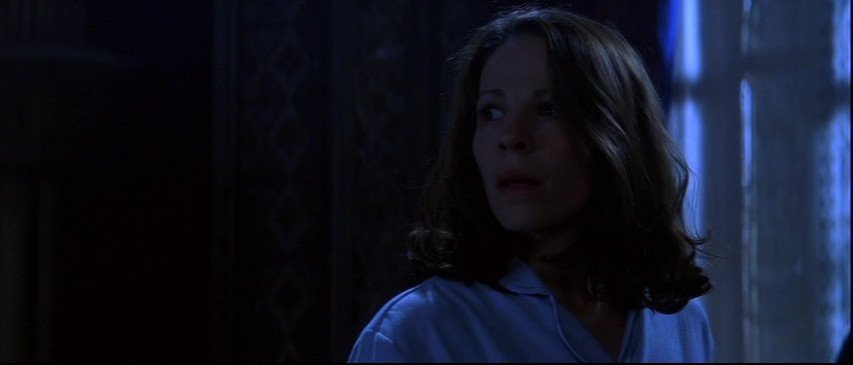
Lili Taylor delivers a committed performance as Nell, capturing her vulnerability and gradual descent into obsession. Her emotional arc provides the film’s central anchor, even when the surrounding spectacle threatens to overpower it.
The film also benefits from a strong supporting cast, with Catherine Zeta-Jones bringing charisma and Owen Wilson offering a lighter, more cynical presence that contrasts with the mounting dread.
What Doesn’t Work
Despite its impressive visuals, The Haunting suffers from an overreliance on CGI, which has aged poorly. Many of the film’s scares feel artificial rather than genuinely unsettling, undermining the tension.
The script deviates significantly from Shirley Jackson’s subtle psychological horror, replacing ambiguity with loud, effects-driven set pieces. This shift sacrifices the creeping dread of the original story in favour of spectacle.
Character development outside of Nell is limited, leaving the ensemble feeling underutilised. Liam Neeson’s Dr. Marrow, in particular, lacks the complexity needed to fully engage the audience.
Pacing issues also emerge in the latter half, as the film becomes increasingly chaotic and less focused, culminating in an ending that feels rushed and overly explanatory.
Final Thoughts: Does It Hold Up?
The Haunting (1999) does not hold up particularly well as a horror film, especially when compared to more restrained and psychological adaptations of the source material. However, it remains an interesting example of late-90s studio horror, ambitious in scale but ultimately undermined by its reliance on visual effects over atmosphere.
For viewers who appreciate gothic visuals and big-budget set design, it still offers some entertainment value, even if it falls short of true terror.
Who Would Enjoy This Episode?
- Fans of large-scale gothic horror settings.
- Viewers interested in late-90s horror cinema.
- Those who enjoy visually elaborate haunted house films.
Who Might Not Enjoy It?
- Fans of subtle, psychological horror.
- Viewers who dislike heavy CGI in horror films.
- Admirers of Shirley Jackson’s original novel seeking a faithful adaptation.
Final Verdict
The Haunting (1999) is a visually impressive but ultimately flawed haunted house film. While its grand design and strong lead performance offer moments of intrigue, its reliance on dated effects and lack of subtlety prevent it from achieving lasting impact.